How Many Bags of Concrete
for a 10×10 Slab?
Engineer-verified answers for every bag size and slab thickness — plus an interactive calculator.
How Many Bags of Concrete for a 10×10 Slab?
For a standard 10×10 slab at 4 inches thick, you need:
- 56 bags of 80 lb concrete (buy 62 with 10% waste)
- 74 bags of 60 lb concrete (buy 82 with 10% waste)
- 111 bags of 40 lb concrete (buy 122 with 10% waste)
This covers 1.23 cubic yards (33.3 cubic feet) of concrete. Always add 5–10% extra for waste and spillage.
| Thickness | Cubic Yards | 80 lb Bags | 60 lb Bags | 40 lb Bags | Use Case |
|---|---|---|---|---|---|
| 3 inches | 0.93 yd³ | 42 | 56 | 84 | Light walkway |
| 3.5 inches | 1.08 yd³ | 49 | 65 | 98 | Sidewalk (min.) |
| ⭐ 4 inches | 1.23 yd³ | 56 | 74 | 111 | Patio, shed base |
| 5 inches | 1.54 yd³ | 70 | 93 | 139 | Light vehicle pad |
| 6 inches | 1.85 yd³ | 84 | 111 | 167 | Garage/driveway |
| 8 inches | 2.47 yd³ | 112 | 148 | 222 | Heavy equipment |
⭐ = Most common residential thickness. All figures before 10% waste factor. Bag yields: 80 lb = 0.60 ft³, 60 lb = 0.45 ft³, 40 lb = 0.30 ft³.
Step-by-Step: The Math Behind It
Here’s exactly how to calculate bags of concrete for a 10×10 slab — the same formula our calculator uses, verified against ACI 318 standards.
-
Convert thickness to feet 4 inches ÷ 12 = 0.333 feet. Always convert inches to feet before calculating volume.
-
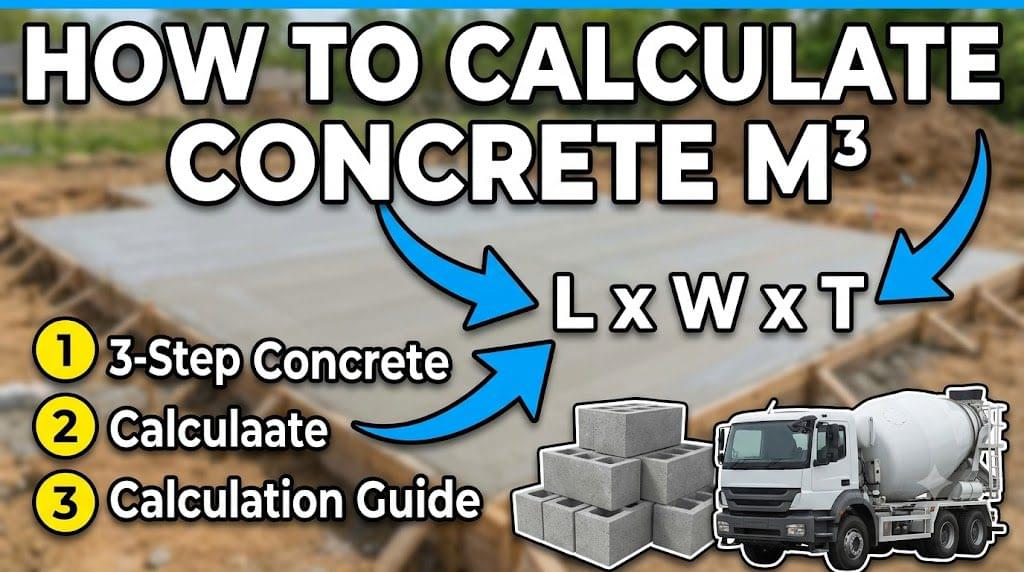
Calculate volume in cubic feet Length × Width × Thickness = 10 × 10 × 0.333 = 33.3 cubic feet
-
Convert to cubic yards 33.3 ÷ 27 = 1.23 cubic yards (there are 27 cubic feet in one cubic yard)
-
Add a 10% waste factor 1.23 × 1.10 = 1.35 cubic yards needed to purchase
-
Divide by bag yield 80 lb bag yields 0.022 yd³ → 1.35 ÷ 0.022 = 61 bags (round up)
What Thickness Does a 10×10 Slab Need?
Slab thickness is the biggest variable in your bag count. Here’s what engineers recommend for each use case:
4 Inches — Standard Residential (Most Common)
The 4-inch thickness (56 bags of 80 lb) is the ACI 332 standard for residential patios, walkways, shed bases, and lightweight use. This is the thickness to use for a backyard patio or small shed foundation. Specify 3,000–3,500 PSI concrete mix.
5–6 Inches — Vehicle Traffic or Garage
If your 10×10 slab will bear vehicle weight, park a car on it, or serve as a garage floor extension, step up to 5–6 inches (70–84 bags of 80 lb). Use 4,000 PSI mix and add #4 rebar at 12–16 inches on center. In freeze-thaw climates, specify air-entrained concrete.
6–8 Inches — Heavy Equipment or Structural
A 10×10 slab bearing forklifts, heavy machinery, or acting as a structural element should be 6–8 inches thick (84–112 bags of 80 lb). Consult a structural engineer and use 4,500–5,000 PSI rebar-reinforced concrete.
| Use Case | Thickness | PSI | 80 lb Bags (10×10) | Reinforcement |
|---|---|---|---|---|
| Garden path / walkway | 3.5–4 in | 3,000 | 49–56 | Wire mesh optional |
| Patio / shed base | 4 in | 3,000–3,500 | 56 | 6×6 WWM |
| Utility slab / small pad | 4–5 in | 3,500 | 56–70 | #3 rebar @ 18″ OC |
| Driveway / parking | 5–6 in | 4,000 | 70–84 | #4 rebar @ 12–16″ OC |
| Garage floor | 6 in | 4,000 | 84 | #4 rebar @ 12″ OC |
| Heavy equipment pad | 6–8 in | 4,500–5,000 | 84–112 | Engineer-designed |
Should You Use Bags or Order Ready-Mix?
A 10×10 slab at 4 inches thick requires 1.23 cubic yards. The industry break-even point between bagged and ready-mix is generally 0.75–1.0 cubic yards. You’re right at the edge — here’s how to decide:
Use Bagged Concrete If:
- You’re pouring in stages over multiple days
- The site is inaccessible to a concrete truck
- You have a rented or electric mixer (reduces labor dramatically)
- It’s your first DIY pour and you want pace control
- You’re in a condo, backyard, or tight urban lot
Order Ready-Mix If:
- You have truck access and prefer to pour in one continuous session
- Labor cost matters — 56+ bags requires 3–5 hours of mixing by hand
- You need consistent PSI across the entire slab
- The slab is 5–6 inches thick (cost advantage grows with volume)
Bagged (80 lb): 56 bags × $5.50–$7 = $308–$392 in materials
Ready-mix: 1.23 yd³ × $130–$170/yd³ + delivery (~$100 minimum) = $260–$390 total
For a 10×10 at 4 inches, costs are roughly similar — but bags let you avoid minimum-load fees.
Which Bags to Buy: Quikrete vs Sakrete vs Generic
For a 10×10 slab, any of these options work — they all yield the same volume. Choose by PSI, availability, and intended use:
| Product | PSI | Weight | Yield (ft³) | Best For |
|---|---|---|---|---|
| Quikrete 5000 | 5,000 | 80 lb | 0.60 | Driveways, structural slabs |
| Quikrete Concrete Mix #1101 | 4,000 | 80 lb | 0.60 | General-purpose patios (most popular) |
| Sakrete High-Strength | 4,000 | 80 lb | 0.60 | Patios, steps, footings |
| Quikrete Fast-Setting | 4,000 | 50 lb | 0.375 | Posts, quick repairs |
| Generic / store brand | 3,000–4,000 | 60 lb | 0.45 | Budget DIY patios |
Recommendation: For a standard 10×10 patio or shed base, Quikrete #1101 or Sakrete High-Strength 80 lb bags are the best value. The 4,000 PSI mix is more than adequate and widely available at Home Depot and Lowe’s for $5.50–$7 per bag.
7 Pro Tips Before You Pour
- Always add 10% extra bags. A 10×10 slab nominally needs 56 bags of 80 lb — buy 62. Running short mid-pour leaves a cold joint, which weakens the slab permanently.
- Compact your subbase first. 4 inches of compacted gravel prevents settlement and cracking. Don’t skip this step on soft or clay soils.
- Set forms level and square before you start mixing. Diagonal measurements should be equal (Pythagorean method). Crooked forms waste concrete and look bad.
- Keep your water-cement ratio consistent. Adding extra water weakens the mix. Follow the bag instructions — typically 3–3.5 quarts per 80 lb bag.
- Place control joints every 8–10 feet. For a 10×10 slab, one center control joint (at 5 feet in both directions) is sufficient. Cut 1 inch deep within 24 hours of pour.
- Cure for 7 full days. Cover with plastic sheeting or spray curing compound. Concrete achieves 70% strength at 7 days and full strength at 28 days.
- Don’t pour below 40°F (4°C). Cold concrete sets too slowly and can freeze before it cures. Use hot water in the mix and cover with insulating blankets if temperatures drop overnight.
Need a Different Slab Size?
Use our free slab calculator to get exact bag counts, cubic yards, and cost estimates for any dimensions — including driveways, footings, columns, and walls.
Use Free Concrete Calculator →Frequently Asked Questions
Related Concrete Calculators
- Free Concrete Slab Calculator — any dimensions, any thickness
- Concrete Bag Calculator — enter cubic yards, get bag count
- Concrete Calculator for Driveways — includes rebar and cost estimates
- Concrete Footing Calculator — strip, pad, and perimeter footings
- Round Column / Pier Calculator — sonotubes and deck piers

- How much will a 20kg bag of concrete cover? - July 30, 2026
- how do I calculate how much concrete I need? How to calculate Concrete volume - July 30, 2026
- Concrete volume calculator vs manual measurement: which is more accurate? - July 28, 2026